
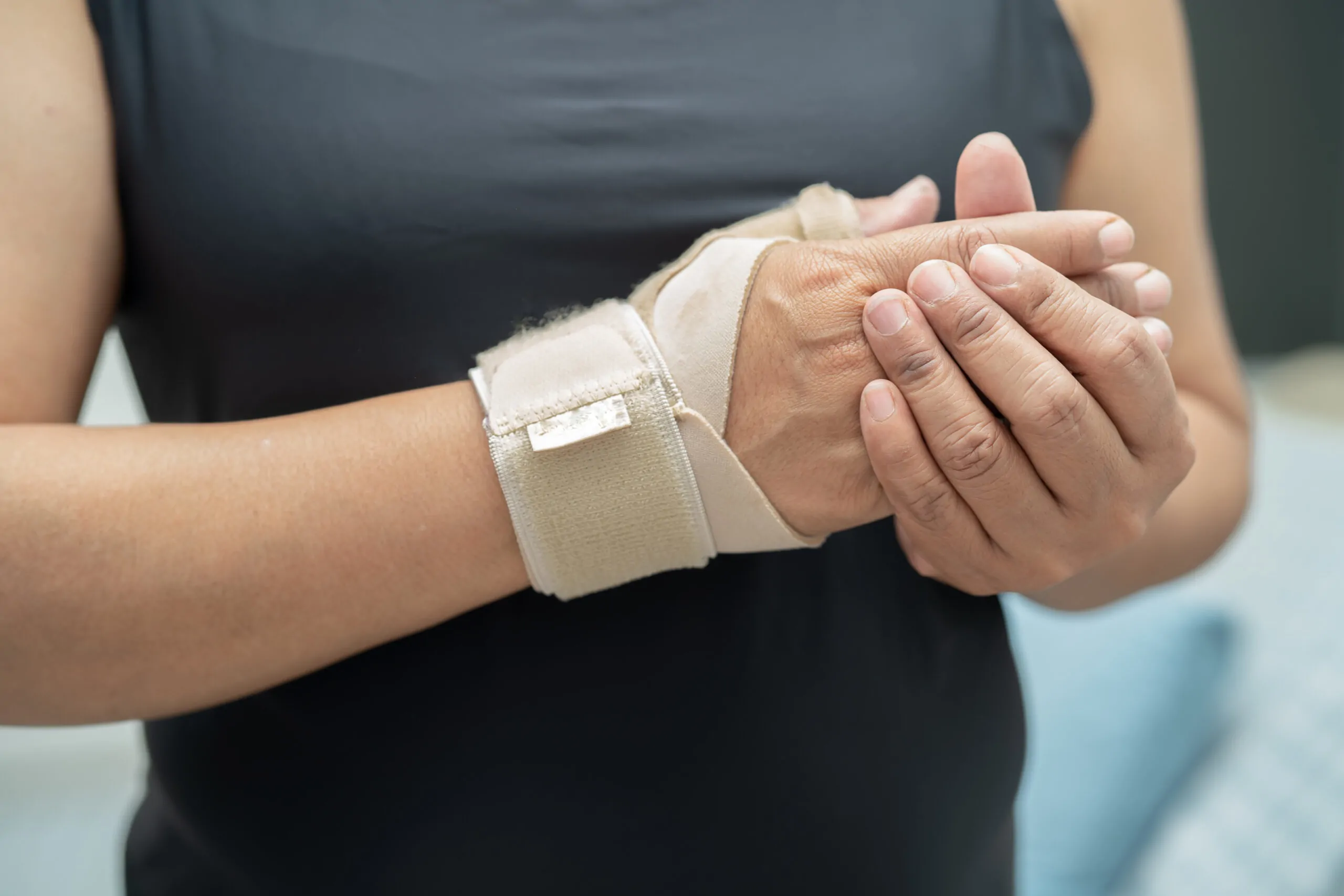
Can Cyclists or Pedestrians Make a TAC Claim in Victoria?
If you’ve been hit while walking or riding in Melbourne (or anywhere in Victoria), you’re not automatically “on your own.”
In many cases, the Transport Accident Commission (TAC) scheme can cover cyclists and pedestrians who are injured in accidents caused by the driving of a motor vehicle.
That can include obvious situations (a car hits you at an intersection) and less obvious ones (a near-miss causes you to swerve and crash).
This guide explains, in a professional but relatable way, when TAC applies, what you can claim, the key time limits, and when extra compensation (common law) may be possible.
It’s general information only—not legal advice—because every accident turns on the details.
Quick answer: yes, cyclists and pedestrians can often claim
In Victoria, pedestrians and cyclists are commonly covered by TAC when they’re injured in accidents caused by the driving of a motor vehicle (and in some circumstances trains or trams).
This matters because it means your ability to access treatment and basic supports is not limited to drivers or passengers.
The practical takeaway: if you were walking, running, riding a bicycle, or pushing a pram and you were injured because a vehicle’s driving caused the incident,
it’s worth checking TAC eligibility early—especially because time limits apply.
TAC basics: what it is and what it’s designed to do
TAC is Victoria’s transport accident scheme. It exists to provide support to people injured in transport accidents—drivers, passengers, pedestrians, motorcyclists,
and in many cases cyclists—so they can access treatment and rehabilitation and manage the financial impact of injuries.
No-fault support (why “who caused it” isn’t always the first question)
One reason TAC can be helpful for pedestrians and cyclists is that eligibility for basic benefits generally does not depend on proving fault.
In other words, you can often receive medical benefits and support services even before anyone has “sorted out” who is to blame.
What TAC is really looking for
At the benefits stage, TAC tends to focus on evidence that:
(1) you sustained an injury, and
(2) it was directly caused by the driving of a vehicle (or, in specific situations, related incidents defined in the legislation and policies).
That’s why medical documentation and a clear accident narrative matter so much.
When cyclists and pedestrians are covered by TAC
Pedestrians
Pedestrian claims often arise from:
- Crossing at lights, zebra crossings, or roundabouts
- Vehicles turning left or right across footpaths
- Backing out of driveways or reversing in car parks
- Hit-and-run situations (where vehicle details may be unclear at first)
- Incidents near public transport interchanges (trams, buses, trains)
In Melbourne, it’s not unusual for pedestrian accidents to happen in busy inner-city corridors (CBD grid, Southbank, Richmond, Brunswick, St Kilda),
near shopping strips, or in car parks where visibility is poor and drivers are distracted.
Cyclists
Cyclist claims commonly arise from:
- Collisions with cars at intersections or when vehicles change lanes
- “Left hook” crashes where a vehicle turns across a bike lane
- Dooring incidents (a parked car door opens into a rider)
- Rear-end impacts in slow traffic
- Near-misses that cause a swerve and crash (even without contact)
Melbourne’s mix of protected lanes, painted lanes, tram tracks, and high-density traffic can create unique risk patterns for riders—especially in peak hour.
A claim often comes down to connecting the injury to the driving behaviour that caused the incident.
Do you need to be hit by a car? (Near-misses, swerves, dooring)
A common myth is: “TAC only applies if a car actually hits you.” In practice, TAC coverage can extend beyond direct impact in certain situations,
where the injury is caused by a feature of the driving.
Near-miss example: swerving to avoid a vehicle
A classic scenario is a cyclist who swerves to avoid a car that pulls out, then falls and is injured—without any contact.
Situations like this can still be considered a transport accident where the incident and injury were caused by the driving.
This is particularly relevant on suburban streets with uncontrolled driveways, angled parking, or vehicles nosing out for visibility.
Dooring: when a car door causes the crash
Dooring is a very Melbourne problem—inner suburbs with dense street parking, café strips, and high bike traffic see it often.
The scheme and related rules recognise dooring-type incidents as part of the broader transport accident framework.
If you’re injured from colliding with an open or opening vehicle door, you should treat it as a potentially TAC-relevant event and document it properly.
Pedestrian near-miss injuries
Pedestrians can also be injured without a direct collision—think jumping out of the way of a speeding vehicle and falling,
or being struck indirectly by something caused by the driving. These cases can be more evidence-heavy, so the earlier you capture details,
the better your chances of avoiding disputes later.
What you can claim: treatment, support, and income
What you can claim depends on your injuries and your circumstances. The categories below are common in cyclist and pedestrian claims.
Not everyone gets every benefit, and most benefits require medical support and evidence that they’re reasonable and related to the transport injuries.
1) Medical treatment and rehabilitation
This can include GP visits, specialist care, imaging, hospital treatment, surgery, physiotherapy, chiropractic, psychology,
occupational therapy, and structured rehabilitation. For pedestrians and cyclists, injuries often include:
- Fractures (wrist, collarbone, ribs, ankle)
- Soft tissue injuries (neck, back, shoulder)
- Dental injuries and facial injuries (especially in cyclist falls)
- Concussion and acquired brain injury symptoms
- Psychological injuries (anxiety, trauma responses, sleep disruption)
The stronger your clinical narrative (symptoms, diagnosis, treatment plan), the smoother approvals tend to be.
2) Support services while you recover
Injuries can change daily life quickly. You might need support with:
- Home help (cleaning, shopping, meal prep)
- Personal care (in serious cases)
- Equipment supports (braces, mobility aids, rehab equipment where clinically appropriate)
- Transport assistance to attend appointments
A practical tip: if you’re struggling at home, ask your treating team to document functional limitations clearly.
“Can’t lift arm above shoulder height” or “unable to stand more than 10 minutes” is far more useful than “sore.”
3) Income support if you can’t work
Pedestrians and cyclists are often surprised to learn that income support may be available if injuries stop you working or reduce your hours.
The key is evidence: medical certificates about capacity plus proof of pre-accident earnings.
In Melbourne, many people work casually, across multiple jobs, or in gig work. That can still be claimable, but it usually requires more documentation
(payslips, rosters, tax records, invoices, bank statements) to show what you were earning before the accident.
4) Impairment benefits (in some cases)
Separate to weekly payments and treatment, there are impairment benefits that may be assessed in line with the relevant legislation and TAC processes.
This is typically more relevant when injuries cause permanent impairment.
What TAC usually won’t pay for
This is an easy area for confusion, especially for cyclists. Many riders assume TAC will replace their bike or damaged gear.
Generally, TAC is focused on injury supports rather than property damage.
- Damage to your bicycle, scooter, or other transport (including towing/storage costs)
- Damage to non-medical personal items (clothes, phones, bike computers, helmets, etc.)
If your bike or gear was damaged, there may be other pathways (insurance, at-fault party claims), but it’s separate from TAC’s typical “injury supports” focus.
Time limits in Victoria: the deadlines that matter
Time limits can make or break a TAC claim—especially for pedestrians and cyclists who initially “push through” and only later realise the injury is serious.
The 12-month time limit to lodge a TAC claim
You generally have 12 months to lodge a TAC claim from the date of the accident, or from when an injury from the accident first becomes evident.
There can be exceptions, but relying on an exception without advice is risky—if you miss the deadline, you may create unnecessary disputes.
Responding to TAC requests
After lodgement, TAC may ask for more information (medical records, incident details, employment evidence).
Delays in responding can slow decisions, and in some situations a claim can lapse if you don’t provide requested information.
Treat TAC letters/emails like a “priority admin task,” even when you’re overwhelmed.
Common law time limits (a different clock)
If you end up pursuing common law damages (covered below), there are separate limitation periods for damages actions.
Practically, if you suspect your injuries are severe or long-lasting, it’s better to get advice early while evidence is fresh
(witnesses easier to find, CCTV/dashcam less likely to be lost, medical history clearer).
How to lodge a TAC claim (step-by-step checklist)
Here’s a practical, cyclist/pedestrian-friendly checklist to make your claim smoother.
You don’t need to be “good at paperwork” to do this—just take it one step at a time.
Step 1: Get medical attention and make sure the accident story is recorded
If you attend a GP, urgent care, or hospital, explain clearly:
where you were, what the vehicle did, how you were injured, and your immediate symptoms.
Ask for this to be documented—medical notes often become the backbone of causation.
Step 2: Capture the scene details (even if you’re shaken)
- Date/time and exact location (street name, intersection, tram stop, bike lane location)
- Vehicle registration (if possible), make/model, and driver contact details
- Photos of the scene, road markings, signage, lighting conditions
- Witness names and numbers
- Any camera sources (shopfront CCTV, dashcams, bodycams, tram cameras)
Step 3: Lodge your TAC claim within time
If there’s any chance your injury will require treatment, time off work, or ongoing rehab, consider lodging sooner rather than later.
Waiting can create deadline stress and make causation harder to prove—especially if symptoms evolve over weeks.
Step 4: Keep a simple claim folder
Create a folder with:
- Medical certificates and referrals
- Invoices/receipts for treatment and prescriptions
- Appointment confirmations
- Payslips/rosters/income evidence if work is affected
- A short symptom diary (pain, sleep, mobility, anxiety, restrictions)
Step 5: Don’t ignore mental injury symptoms
Many pedestrians and cyclists develop fear around roads after an accident—especially after being struck at speed or experiencing a near-miss.
If you’re having panic symptoms, flashbacks, nightmares, or avoiding roads entirely, tell your GP.
Psychological injuries can be real, diagnosable, and treatable—and early support can improve outcomes.
Evidence that strengthens cyclist/pedestrian claims
1) Medical documentation (symptoms + diagnosis + treatment plan)
Aim for medical notes that are specific. Example:
“Pain in left wrist after fall over handlebars due to vehicle turning across lane” is clearer than “wrist sore.”
If concussion is suspected, make sure symptoms (headache, dizziness, light sensitivity, brain fog, nausea) are recorded.
2) Accident mechanism detail
TAC decisions often turn on the “mechanism”: how the driving caused the injury.
For cyclists, this might include:
- Car door opened into rider’s path
- Vehicle merged into bike lane forcing evasive action
- Left-turn across cyclist at intersection
- Tram track hazard triggered by sudden vehicle movement (document carefully)
For pedestrians:
- Vehicle failed to give way while turning across footpath
- Reversing vehicle in car park
- Hit while crossing at marked crossing or lights
3) Witnesses and independent sources
Independent witnesses can be powerful—particularly where the driver disputes the story or leaves the scene.
Also ask nearby businesses quickly about CCTV retention periods (some systems overwrite footage within days).
4) Work evidence (if claiming income support)
Provide clear pre-accident income evidence and a medical certificate that explains work restrictions.
If you can work but only reduced hours or modified duties, document the reduction and why it’s medically necessary.
Can cyclists/pedestrians claim common law compensation too?
Sometimes, yes. TAC support benefits are one part of the system. In more serious cases, cyclists and pedestrians may have options to pursue
common law damages, but this typically involves additional requirements.
The two “gateways” people usually need to understand
- Serious injury: you generally need the injury to meet the definition of “serious injury” for a common law claim.
- Fault/negligence: common law is typically about someone else being at fault (or partly at fault).
Why pedestrians and cyclists often explore common law
Many pedestrian and cyclist accidents involve clear risk behaviours—failing to give way, distracted driving, speeding, opening doors without checking,
unsafe turns, or failing to keep a proper lookout. When injuries are severe (or permanently life-altering), people naturally want to know whether
compensation beyond “weekly payments and treatment” is possible.
“Serious injury” isn’t just a phrase—it’s a threshold
Serious injury is a defined concept and is assessed through a formal process with medical evidence.
If you’re facing permanent impairment, chronic pain, inability to return to your job, or ongoing psychiatric injury,
it may be worth obtaining advice about whether you might meet the threshold.
Do you have to decide immediately?
Not always, but delays can hurt evidence quality. If you think your injuries may be long-term, it’s often smarter to get early advice
so your documentation supports both recovery and any later legal pathway—without scrambling years later.
Special situations: unregistered vehicles, private land, cycling events
Unregistered or uninsured vehicles
People often panic when they find out the vehicle wasn’t registered or the TAC charge wasn’t paid.
These cases can be more technical, but TAC can still provide benefits in many scenarios depending on the facts.
If this applies to you, get advice early so you don’t rely on assumptions.
Accidents on private land (car parks, driveways, private roads)
A lot of pedestrian injuries happen in car parks (shopping centres, apartment buildings, hospital car parks).
Similarly, cyclists can be injured in shared private access ways or driveways.
Private land doesn’t automatically exclude TAC—what matters is whether the incident fits the definition of a transport accident and the driving caused it.
Because these cases can be evidence-sensitive, it’s important to capture scene photos and witness details quickly.
Organised cycling races and speed trials (an important exclusion to know)
There are specific rules around organised professional cycling races or speed trials. In general terms, injuries arising in certain organised professional events
can be excluded from TAC coverage (with some important exceptions and definitions).
If you were injured during a cycling event and you’re unsure whether it counts as an “organised race or speed trial,” get advice fast—this is one area where
a small factual detail (professional vs amateur/club ride, road status, event type) can completely change entitlements.
Work-related travel overlaps
If you were riding or walking for work purposes (for example, a delivery rider, a worker walking between sites, or commuting in a way that triggers employment issues),
you may face an overlap between TAC and WorkCover concepts. That doesn’t mean you can’t claim—just that the right pathway needs to be chosen.
If you’re unsure, speak to a professional rather than guessing.
Recovery realities: physical injuries and psychological impacts
A cyclist or pedestrian accident can be physically painful and emotionally disruptive in ways that people don’t anticipate.
In Melbourne, many people rely on walking/cycling as transport, fitness, and mental wellbeing—so losing that routine can have a bigger ripple effect than “just an injury.”
Common physical recovery patterns
- Fractures: may heal on scans but leave stiffness, weakness, nerve symptoms, or chronic pain.
- Soft tissue injuries: can be slow and frustrating, with flare-ups and sleep disruption.
- Concussion: symptoms may linger and affect work, concentration, and mood.
Psychological injury is common—and valid
It’s not “overreacting” to feel anxious after being struck or nearly struck by a car.
Some people become fearful at intersections, avoid cycling entirely, or experience panic symptoms near traffic.
Early treatment can help, and documenting these symptoms with a GP or psychologist can be important for accessing supports.
Be honest about what you can’t do
Many people downplay injuries: “I’m okay,” “It’s not that bad,” “Others have it worse.”
But claims (and treatment outcomes) work better when the real limitations are documented:
can you work a full day, lift, drive, walk, sit, sleep, concentrate, handle stairs, carry groceries, or look after kids?
FAQ’s
Can pedestrians make a TAC claim in Victoria?
Yes, pedestrians injured in accidents caused by the driving of a motor vehicle are commonly covered under TAC in Victoria.
Eligibility and benefits depend on the facts, injury evidence, and time limits.
Can cyclists claim TAC even if they weren’t hit by a car?
In some circumstances, yes. A cyclist may still be covered where the incident and injury were caused by a feature of the driving
(for example, swerving to avoid a vehicle and crashing). These claims can be more evidence-dependent, so document details early.
Does TAC cover dooring accidents?
Dooring incidents are recognised within the broader transport accident framework, and cyclists injured by an opening door may be covered.
Capture details (rego, location, photos, witnesses) quickly, because disputes can arise later.
What can I claim through TAC as a cyclist or pedestrian?
Potentially medical treatment and rehabilitation, support services, and income support if you can’t work or your work is reduced due to the injuries.
The exact benefits depend on the injury evidence and what is considered reasonable and related to the accident.
Will TAC replace my bicycle or damaged gear?
Typically, TAC focuses on injury-related supports rather than property damage.
Damage to bicycles and personal items is usually not covered under TAC benefits.
How long do I have to lodge a TAC claim?
You generally have 12 months from the accident date, or from when the injury first becomes evident.
If you’re unsure, it’s safer to act early rather than rely on exceptions.
Can cyclists or pedestrians claim common law compensation as well?
Sometimes. Common law compensation may be available if you have a serious injury and someone else was at fault (or partly at fault).
This pathway is more technical and usually needs tailored advice.
What if the car that caused the accident was unregistered or I was hit in a car park?
These situations can still potentially fall within TAC, but they’re more technical and evidence-driven.
Get advice early and gather as much detail as possible about how the driving caused the injury.
Final Thoughts
If you were injured as a cyclist or pedestrian in Victoria, you may be able to make a TAC claim—often even before fault is resolved.
The best outcomes usually come from:
- Getting medical care early and ensuring the mechanism of injury is documented
- Lodging within the time limits (don’t “wait and see” if symptoms are building)
- Keeping evidence: scene details, witnesses, CCTV/dashcam leads, and work records
- Getting advice early if injuries are serious, long-lasting, or you suspect common law may apply
If your injuries are affecting your ability to work, function at home, or return to riding/walking confidently, it’s worth speaking with a professional
so you understand your entitlements and next steps.
Melbourne recommendation: Hymans Legal
If you want help navigating a TAC claim as a cyclist or pedestrian—especially if your injuries are serious, you’re off work, or you’re unsure about your rights—
consider speaking with Hymans Legal.
Phone: 1300 667 116
Website: https://hymanslegal.com.au/